Designing a built-in wardrobe for a small bedroom is not just about adding storage. The layout also shapes how open, functional and comfortable the room feels day to day. In compact bedrooms, poor wardrobe planning can reduce walkways, block light, limit access and make the space feel more crowded than it needs to. With insight from Silva Wardrobe Co., this article looks at the layout mistakes that often cause those problems and explains what a better design should include when planning built in wardrobes in Sydney.
From door clearances and internal storage balance to ceiling height, corners and lighting, each decision affects how well the wardrobe works within the room. When these elements are handled properly, a built-in wardrobe can help a small bedroom feel more organised, more usable and noticeably less cluttered.
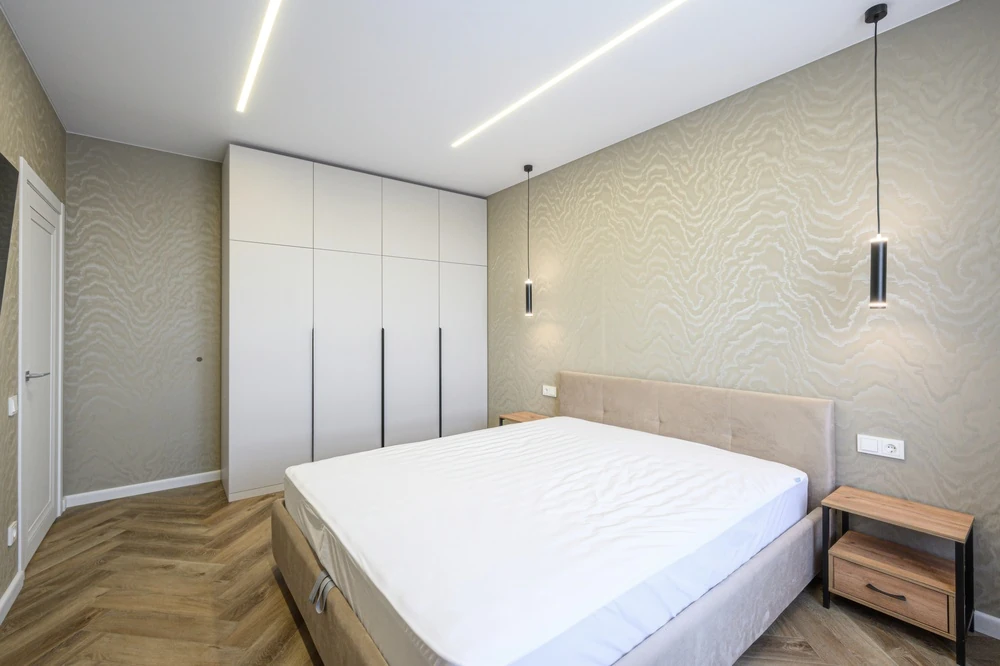
In a small Sydney bedroom, a wardrobe should support the room rather than dominate it. When the scale, placement or proportions are wrong, the wardrobe can quickly make the space feel boxed in. Many of the most common layout problems come down to how the wardrobe interacts with movement, furniture placement, natural light and the overall shape of the room.
Avoiding these mistakes is not about reducing storage for the sake of appearance. It is about making sure the wardrobe fits the room properly so the bedroom remains comfortable, practical and visually balanced.
One of the most common mistakes is designing a wardrobe that is simply too bulky for the room. In practical terms, that often means a wardrobe that is too deep, too wide or too visually heavy for the available floor area. While a standard depth of around 600 mm usually works well for hanging clothes, going much deeper in a compact bedroom can start to reduce usable space around the bed.
A wardrobe that runs wall to wall without any visual relief can also overwhelm a small room. Long, uninterrupted doors can make the joinery feel like a solid block rather than an integrated part of the bedroom. In tighter spaces, better proportions, breaks in the façade or a more considered finish can help the room feel less compressed.
Ceiling height also matters. A wardrobe that stops short and leaves a large gap above often looks bulkier than one that runs full height with a neat finish. Full-height cabinetry usually creates a cleaner line, reduces wasted space and helps the wardrobe feel more connected to the room itself.
Wardrobe doors need to work with the room, not against it. Hinged doors are a common source of frustration in small bedrooms when they open into beds, bedside tables or narrow walkways. A wardrobe might look workable on a floor plan, but if the doors cannot open properly once the room is furnished, the layout has not been resolved well.
Conflict points are especially common when the wardrobe sits near the bedroom entry, close to a corner, or opposite a larger bed. If the room relies on awkward manoeuvring just to open a door, the wardrobe will feel inconvenient every day. That often leads to doors being left ajar, circulation feeling tighter and the room looking more cluttered.
Sliding doors can be a better option in compact rooms, but only when the wardrobe position and internal access have been planned carefully. They save swing space, but they do not fix every issue on their own. The overall layout still needs to allow comfortable movement and clear access to the sections behind each panel.
A built-in wardrobe should never make a bedroom feel darker or more closed in than necessary. Positioning joinery too close to a window, or in a way that interrupts the natural flow of light across the room, can make even a reasonably sized bedroom feel smaller.
Sightlines matter as well. In many small rooms, the first view from the doorway has a strong effect on how open the space feels. If that first impression is the side of a bulky wardrobe instead of a clearer line through to the window or a lighter part of the room, the bedroom can immediately feel more confined.
Existing features also need to be respected. Power points, switches, skirtings, architraves and air conditioning units should all be considered early in the planning stage. If the wardrobe forces awkward furniture placement or blocks access to practical elements already in the room, the layout will create everyday inconvenience instead of solving storage problems.
One of the biggest reasons a built-in wardrobe feels awkward in a small bedroom is that not enough space has been left in front of it. Good wardrobe design is not just about fitting cabinetry onto a wall. It is also about making sure doors, drawers and the person using them can move comfortably within the room.
In compact Sydney bedrooms, these clearances need to be planned at the same time as the bed position, furniture layout and wardrobe internals. Leaving them until the end often leads to a wardrobe that looks good on paper but feels frustrating in use.
Hinged doors generally need the most room to operate. As a planning guide, allowing around 900 mm between the front of the wardrobe and nearby furniture often gives enough space to open the door and stand in front of it comfortably. In tighter rooms, that kind of clearance is not always achievable, which is why hinged doors are not always the best option.
The full swing of each door should be checked against the actual furniture that will sit in the room, including the bed frame, bedside tables and any deeper bedhead. It is easy to underestimate how much space these elements take up once everything is in place.
Sliding doors are often better suited to narrow rooms because they do not swing out into circulation space. Even so, track depth, handle position and access to the internal layout still need to be considered carefully. A sliding system should improve usability, not simply disguise a tight layout.
Internal drawers and pull-out fittings also need proper clearance to work well. A drawer that technically opens but leaves no room to stand, bend or sort through items comfortably will still feel inconvenient. In many cases, allowing around 650 mm of clear floor space in front of drawers helps them function more effectively, although exact needs will vary depending on the drawer depth and room layout.
This becomes even more important when hinged doors are involved. If the door cannot open wide enough, internal drawers may catch or become difficult to access. In smaller bedrooms, this is often a sign that the internal layout and door style have not been planned together.
Other fittings such as pull-down hanging rails, pivot mirrors and pull-out baskets also need operating space. These features can be useful, but only when they genuinely suit the dimensions of the room and are not included at the expense of practical movement.
The relationship between the bed and the wardrobe is one of the most important parts of the layout. In small bedrooms, the walkway between them often determines whether the room feels functional or cramped. As a general guide, a clear passage of around 800 to 900 mm between the bed edge and the wardrobe usually supports more comfortable daily use.
When circulation drops below that, everyday tasks such as getting dressed, changing bedding or vacuuming become noticeably harder. The room can also start to feel compressed even if the wardrobe itself is well designed.
This is why the bed size should be confirmed before the wardrobe layout is finalised. In some rooms, a slight shift in bed position, a change in wardrobe depth or a switch from hinged to sliding doors can make the overall layout work far better without sacrificing too much storage.
A built-in wardrobe can still feel impractical even when the outer layout is right. One of the most common internal planning mistakes is choosing the wrong mix of hanging space, shelves and drawers. When the balance is off, clothes become harder to organise, storage starts overflowing into the room and the wardrobe does not function as efficiently as it should.
The best internal layout depends on what actually needs to be stored. Rather than relying on a standard arrangement, it is far more effective to assess how many long garments, folded items, accessories and smaller clothing categories need a home.
Long hanging space is often overused in small wardrobes. While it is necessary for dresses, coats and a smaller number of longer items, it takes up a large amount of vertical space. In many bedrooms, only a limited section of the wardrobe genuinely needs this full height.
Short hanging usually offers better efficiency for shirts, jackets, skirts and trousers. Double hanging can make especially good use of height by creating two levels instead of leaving unused space below a single rail. This is often one of the simplest ways to improve storage capacity in a compact bedroom.
A common mistake is using one full-height rail across an entire section without considering whether that space could be divided more effectively. When that happens, the wardrobe may look generous but still fail to store everyday clothing well.
Shelves are extremely useful, but only when they are proportioned properly. Shelves that are too deep or spaced too far apart often lead to unstable stacks, hidden clothing and wasted space. In smaller wardrobes, shelf spacing generally works better when it suits the actual size of folded items rather than creating tall open voids.
Shelves are particularly useful for knitwear, jeans, casual clothing, bags and seasonal pieces. They also make it easier to see what is stored at a glance, which can be a major advantage over deep drawers for some categories.
Problems usually arise when shelving is treated as an afterthought. A wardrobe with too little shelf space often forces too many folded items into drawers or leaves them stacked awkwardly on high top shelves where they are harder to reach and easier to ignore.
Drawers can make a wardrobe feel more resolved, but they are not always the most space-efficient answer for every category. A full bank of large, deep drawers can quickly consume storage volume that might be better used for hanging or adjustable shelving.
Drawers are usually most effective for smaller clothing items, accessories, sleepwear, activewear and anything that tends to look messy on open shelves. In many cases, shallower drawers are more useful than oversized deep ones because they keep contents visible and easier to organise.
The key is to use drawers selectively rather than filling the wardrobe with them by default. In a compact bedroom, the internal balance should reflect how the wardrobe will actually be used, not just what looks premium on a specification list.
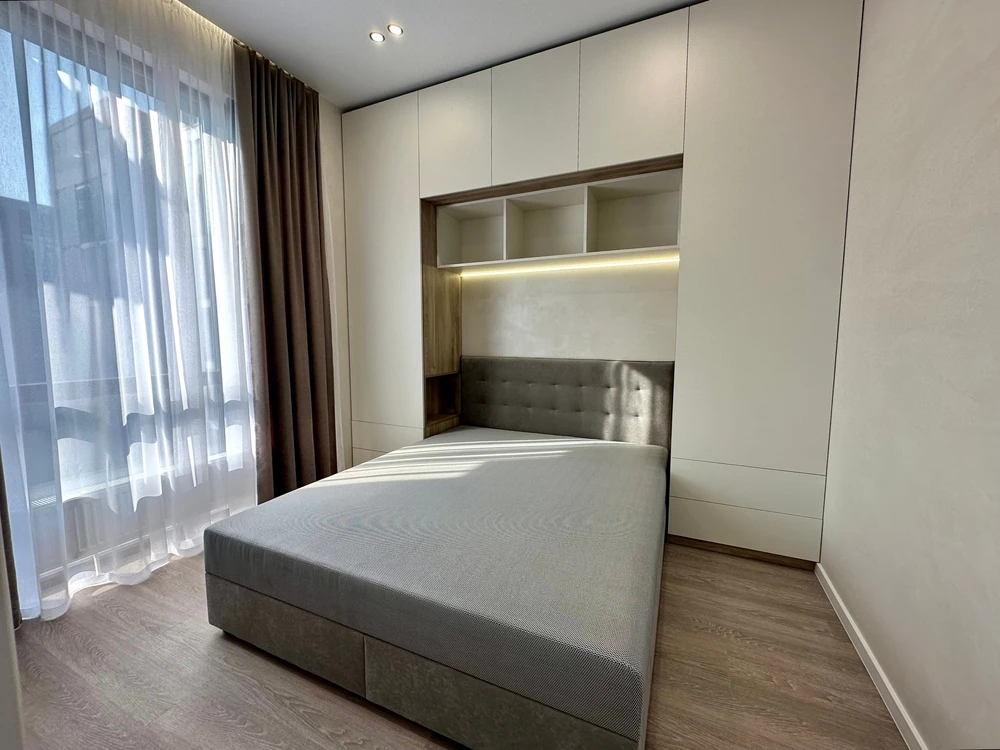
In a small bedroom, the most overlooked storage opportunities are often above eye level, deep in corners or tucked into narrow recesses. These areas are easy to ignore because they are less straightforward to design, but in a compact room they can make a meaningful difference.
A well-planned wardrobe uses the full volume of the available space rather than focusing only on the easiest central sections. That approach helps keep everyday storage efficient while giving less frequently used items a proper place.
Leaving a large void above a built-in wardrobe is one of the most common missed opportunities in small bedrooms. That space often becomes a dust trap rather than useful storage, while the bedroom loses the visual neatness that full-height joinery can provide.
Running the wardrobe higher, with overhead cupboards or a well-finished infill panel, usually creates a cleaner look and adds valuable storage for items that are not needed every day. Suitcases, spare bedding, travel bags and off-season clothing are all well suited to these upper areas.
Using height properly also means reconsidering whether a single long-hanging section is the best use of the room. In many wardrobes, a combination of double hanging, drawers and upper cupboards makes far better use of vertical space.
Corners are difficult, but they should not automatically be written off. In many wardrobe layouts, corners are either blocked completely or left to become dead space behind fixed panels. In a small bedroom, that can mean losing a surprising amount of usable storage.
The most practical approach is to use corner areas for items that do not need to be accessed constantly. Corner shelving, shared hanging solutions or dedicated corner modules can all work well when designed deliberately. The goal is not necessarily to make every corner a premium access point, but to stop it becoming wasted volume.
Access is the deciding factor. If corner storage is included without thinking through door movement or reach, it can become more frustrating than useful. When handled properly, though, it can improve overall capacity without taking up extra floor space.
Small leftover gaps beside walls, windows, bulkheads or chimney breasts are often treated as too awkward to use. In reality, these narrow sections can sometimes be ideal for shallow shelves, slim drawer stacks, shoe storage or vertical pull-out accessories.
These details are especially valuable in older homes and apartments where room shapes are not always clean or symmetrical. A tailored approach to awkward spaces can help the entire wardrobe feel intentional and better integrated into the room.
Rather than trying to force every section to follow the same pattern, good design responds to the actual conditions of the space. That is often what separates a wardrobe that merely fits from one that functions properly.
A built-in wardrobe may look well resolved on a drawing, but daily use often reveals the real weaknesses in the layout. Poor visibility, awkward access and thoughtless internal placement can all reduce the usefulness of the wardrobe, even when the joinery itself looks good.
In small bedrooms, these details matter even more because there is less room to compensate for inconvenience. A wardrobe should not only hold items efficiently. It should also make them easy to see, reach and put away.
Lighting is often overlooked until the wardrobe is already in use. In deeper sections, ceiling lights do not always reach the back clearly, especially in darker bedrooms or where the wardrobe sits away from the main source of natural light.
Integrated LED strip lighting or discreet sensor lighting can make a major difference to visibility without taking up additional room. These features are particularly useful in hanging sections, upper shelves and corners where shadows tend to build up.
Lighting should support practical use rather than simply add a feature. A wardrobe that is hard to see into will almost always become harder to keep organised over time.
Everyday use should shape the internal layout from the beginning. Frequently worn items should sit within the most comfortable reach zone, generally between hip and shoulder height, while less-used items can move higher or lower.
If the wardrobe places daily clothing in hard-to-reach positions and reserves the best-access areas for occasional items, it will feel inconvenient no matter how much storage it provides. The design should reflect how people actually get dressed, unpack, fold clothes and move through the room.
It is also worth considering the kinds of items that tend to accumulate in bedrooms, such as bags, gym gear, shoes or accessories. Providing a clear place for these can help prevent clutter from ending up on chairs, floors or the bed.
Accessories and specialised fittings can be useful, but too many can make a wardrobe harder to use rather than better. Pull-out trouser racks, jewellery trays, mirrors and basket systems all have their place, but they should be included because they solve a real storage problem, not simply because they are available.
In smaller wardrobes, a simpler internal layout often performs better. Adjustable shelves, practical drawer placement and well-sized hanging sections usually provide more long-term flexibility than an interior filled with niche fittings.
The best designs focus on ease of use. A wardrobe should support daily habits with minimal effort, not require constant workarounds.
A well-planned built-in wardrobe should improve both storage and the feel of the room. In a small Sydney bedroom, that means using space efficiently without making the room feel crowded, awkward or visually heavy. The layout should support movement, keep everyday items accessible and make full use of the available height and width.
This is what separates carefully designed built in wardrobes in Sydney from wardrobes that simply fill a wall. Good planning considers not just what needs to be stored, but how the bedroom functions as a whole.
The internal layout should reflect real clothing and storage needs. That usually means a measured balance of long hanging, short hanging, shelving and drawers rather than relying too heavily on one type of storage.
For many people, a smaller section of long hanging combined with more efficient short hanging, practical shelf space and a modest number of drawers creates a better result than a layout dominated by full-height hanging or oversized drawer banks. Adjustable elements are also useful because storage needs often change over time.
When the internal mix matches what actually needs to be stored, the wardrobe is far more likely to stay organised and functional.
Height should be used strategically rather than filled without a plan. Everyday items should sit in the most accessible areas, while upper sections can hold seasonal or occasional-use items. This makes the wardrobe easier to use while still taking advantage of the full room height.
In smaller bedrooms, vertical planning often has a bigger impact than increasing wardrobe depth. Better use of upper cupboards, double hanging and narrow vertical sections can improve capacity without pushing the wardrobe further into the room.
This is one of the most effective ways to create more storage while keeping the bedroom feeling balanced.
The right door style depends on the room layout, not just personal preference. Sliding doors often work well where circulation is tight, while hinged doors can offer better full-width access where space allows. The important point is that the door choice should support comfortable use and work with nearby furniture, walls and windows.
Clear access in front of the wardrobe matters just as much as the joinery itself. A well-planned layout allows doors, drawers and people to move without conflict. When that happens, the wardrobe feels easier to use and the whole room functions better.
A built-in wardrobe should make a small bedroom easier to live with, not harder. When the layout is poorly planned, it can reduce movement, create clutter, waste valuable storage space and make the room feel more closed in than it really is. Many of the most common problems come back to the same issue: the wardrobe has been designed as an isolated unit rather than as part of the room.
A better result comes from looking at the full picture. Door clearances, internal storage mix, ceiling height, corner use, lighting and daily access all need to work together. When they do, the wardrobe becomes more than a storage addition. It becomes a practical part of the room that supports a calmer, more organised and more spacious bedroom.
Here at Silva Wardrobes, we believe that you shouldn't have to compromise on quality when you’re on a budget. We offer a wide range of built in wardrobe designs in varying materials and finishes, so you can get the perfect built in or walk in wardrobe for your home no matter what the budget you're working with.
Proudly Australian owned and made. All our work is carried out locally in Sydney with only the highest level of craftsmanship and comes with a lifetime guarantee.

Contact us for a free measure and quote in the Sydney metropolitan area. We send out a qualified tradesman, not just a salesman.

We then create all the components to your perfect built in wardrobe to exact specifications using only the highest quality materials

A wardrobe technician will then deliver and install your wardrobe ensuring you are 100% happy with the job before they leave.


