Choosing mirrored wardrobe doors is rarely just about appearance. The right choice depends on room size, natural light, layout and how the space is used every day. For homeowners considering built-in wardrobes in Sydney, understanding the advantages and limitations of mirrored doors can make the decision more straightforward. Silva Wardrobe recognises that the best wardrobe design balances aesthetics with everyday functionality.
This article takes a practical look at mirrored wardrobe doors, including where they work well, where they may create challenges and which rooms benefit most from their reflective finish. It also explains how mirrors influence light, space, maintenance and overall bedroom design, helping create a wardrobe solution that complements the home and daily living.
Mirrored wardrobe doors offer more than a place to check an outfit. They can change how a bedroom feels, improve everyday convenience and make better use of available space. For many homes, they combine storage, a full-length mirror and a design feature in one practical element.
Understanding these benefits helps determine whether mirrored doors suit a room’s size, light levels and style. The following advantages apply to both fitted and freestanding wardrobes across different interiors.
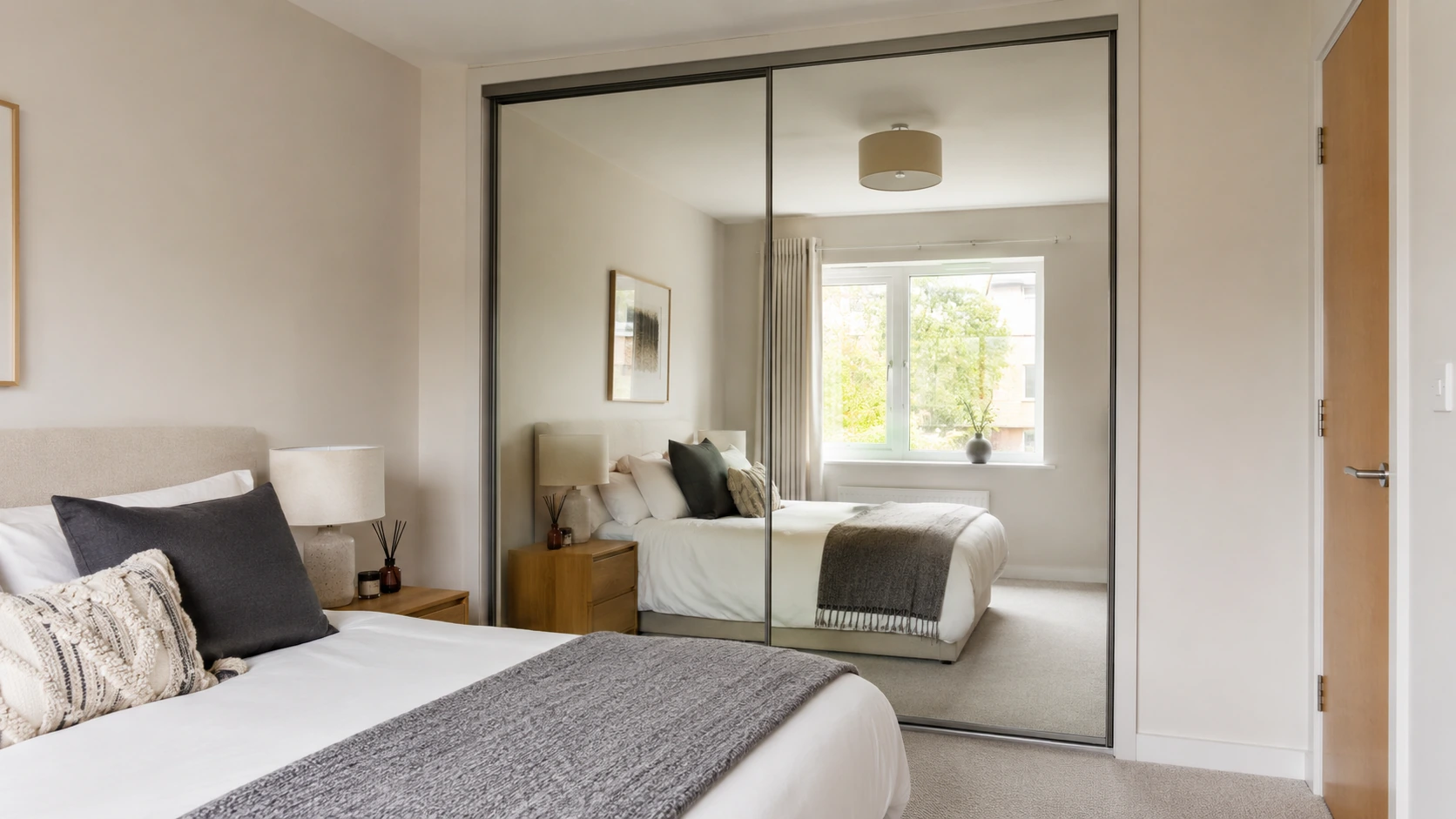
One of the main reasons to choose mirrored doors is their ability to make a room feel larger. The reflective surface bounces light around the space, reduces shadows and helps compact bedrooms feel more open.
In a small or awkwardly shaped room, mirrored doors can soften the visual impact of bulky storage. Placing them where they reflect a window, light-coloured wall or open section of the room can help the space feel wider and brighter. In south-facing bedrooms, shaded rooms or spaces with limited windows, mirrored wardrobes can also help avoid the closed-in feeling that solid dark doors may create.
Mirrored wardrobe doors remove the need for a separate freestanding or wall-mounted mirror. This is especially useful in modest bedrooms, apartments and guest rooms where every centimetre matters. Instead of using extra wall or floor space for a dressing mirror, the wardrobe doors perform both functions.
This can be practical in several ways:
For sliding wardrobes, mirrored panels are particularly effective because they provide a generous reflective area in a shallow footprint. Hinged doors with mirrored inserts can also work well when positioned near a dressing table, vanity or dedicated getting-ready area.
Beyond aesthetics, mirrored doors add simple everyday convenience. Getting dressed becomes easier when clothing storage and a mirror are in the same place. Items can be held up directly while still hanging on the rail, reducing the need to lay clothes out on the bed or move between different areas of the room.
For shared bedrooms, mirrored wardrobes can also help the space function more efficiently. One person may use one section of the mirror while another uses a different panel or part of the wardrobe. In children’s or teenagers’ rooms, an integrated wardrobe mirror may also be more practical than a freestanding mirror that can be knocked over or moved around.
Mirrored wardrobe doors can visually enlarge a room and add useful reflective surfaces, but they are not the right choice for every space or lifestyle. Before committing, it is worth considering the practical downsides that can affect daily use, maintenance and long-term satisfaction.
The following considerations highlight where mirrored doors may create issues so potential problems can be addressed before installation.
Mirrors show fingerprints, dust and streaks much more easily than painted, laminate or timber-style doors. In bedrooms and dressing spaces where doors are handled frequently, visible marks can appear quickly, especially around handles and at hand height.
Families with young children or pets may also notice smears and marks at lower levels. Anyone choosing mirrored doors should be prepared for:
For those who prefer very low-maintenance finishes, a full wall of mirrored doors may feel demanding over time. A partial mirror design or combination of mirrored and solid panels may be a better option.
Mirrors reflect whatever they face. In a well-planned bedroom, this can be an advantage. In a busy or compact room, however, reflections can add visual noise and make the space feel more cluttered.
If mirrored doors face an unmade bed, a cluttered desk, open shelving or a laundry basket, they will repeat that view and make the room appear busier. In small or narrow bedrooms, constant reflections of movement can also feel distracting. Strong sunlight or bright ceiling lights may create glare, especially if the mirror is positioned directly opposite the light source.
Careful placement is essential. Mirrored doors work best when they reflect a simple area, such as a plain wall, window, neat section of flooring or uncluttered part of the room.
Quality mirrored wardrobe doors should use appropriate safety glass or safety-backed mirror panels. However, glass surfaces are still more vulnerable to chips and cracks than solid doors. Impacts from furniture, heavy objects or children’s play can damage the surface. Chips around the edges can be sharp, unsightly and difficult to repair without replacing the panel.
Privacy is another consideration. A large mirrored surface can feel intrusive in guest bedrooms or shared spaces where not everyone wants to see their reflection from multiple angles. Some people also find full-height mirrors unsettling at night, especially when positioned opposite the bed. In these cases, a smaller mirror, framed mirror insert or partial mirrored door may feel more comfortable.
Mirrored wardrobe doors work best when they solve more than one problem at once. They are most effective where space is tight, natural light is limited or a separate full-length mirror would be difficult to place.
They also suit interiors that already have a clean, modern or minimal style. In the right room, mirrored doors can feel intentional and well integrated rather than simply functional.
Mirrored wardrobe doors can be especially useful in compact bedrooms. They reflect walls, windows and flooring, helping the eye read the space as wider and deeper than it really is. This is valuable in apartments, smaller homes and bedrooms where storage takes up a large section of wall.
They are also useful in narrow rooms where free wall space is limited. Instead of sacrificing floor area for a standing mirror, the reflective surface becomes part of the wardrobe frontage. This keeps circulation routes clear, which matters when beds are close to doorways, walls or furniture.
Placement still matters. Mirrored doors work best when they reflect open space or natural light rather than the side of furniture or a cluttered corner. Aligning a mirrored run opposite the longest clear wall usually creates the most balanced effect.
Bedrooms with limited natural light can benefit from mirrored wardrobe doors. By reflecting available daylight, mirrors can help distribute light deeper into the room and reduce the need for artificial lighting during the day.
This can be useful in south-facing rooms, shaded bedrooms, rooms affected by neighbouring buildings or spaces with small windows. For the best result, mirrored doors should catch light at an angle rather than reflect harsh sunlight directly. Pairing mirrored doors with pale walls, simple window treatments and soft furnishings can brighten the room without making it feel cold or overly reflective.
Mirrored wardrobe doors are also effective in rooms that serve more than one purpose. A guest room, home office, dressing room or small workout space may benefit from storage and a full-length mirror without needing extra furniture.
They can also work well in shared bedrooms. In a main bedroom, two mirrored wardrobe doors may provide enough reflective surface for both partners without needing separate mirrors. This is useful where wall space is already occupied by windows, artwork, furniture or heating and cooling units.
In multi-use rooms, it is often best to limit mirrors to one run of doors rather than every panel. This keeps the functional benefit while preventing the space from feeling like a studio or changing room.
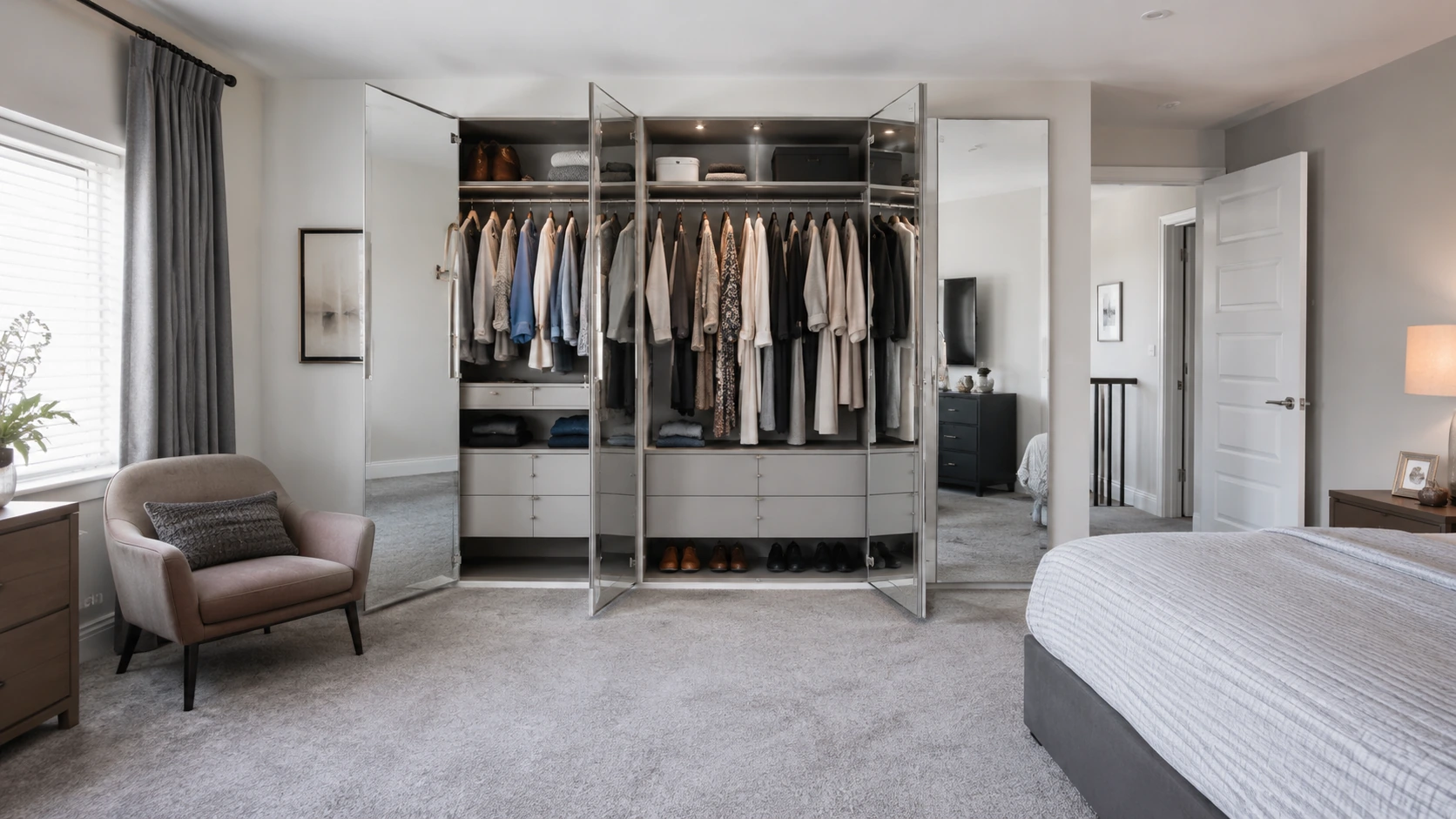
Choosing between sliding and hinged mirrored wardrobe doors affects how the room functions as much as how it looks. The right option depends on available floor space, daily access needs and whether a seamless reflective surface is important to the overall design.
Both styles can work well with mirrored fronts, but each has advantages and limitations that should be considered before installation.
Sliding mirrored doors suit tight or awkward rooms where there is limited clearance in front of the wardrobe. Because the panels move side to side on a track, they do not swing into the room. This allows a larger wardrobe to be installed near a bed, desk or narrow walkway.
The trade-off is partial access. Only one section of the wardrobe can usually be opened at a time, so internal drawers, shelves and hanging sections need to be carefully planned. Wide drawers must be positioned so they can pull out fully when a panel is open.
Hinged mirrored doors require clear space in front to swing open. This works well in larger bedrooms or dressing rooms where there is enough floor space between the wardrobe and nearby furniture. In return, hinged doors provide full-width access to the wardrobe interior, making shelves, drawers and hanging rails easier to reach.
Sliding systems often allow larger uninterrupted mirror panels, creating a contemporary wall-of-glass effect. This can work well on long wardrobe runs or in modern apartments where the goal is to make the room feel wider and brighter. The continuous surface is also practical for full-length outfit checks.
However, sliding tracks need occasional cleaning to keep the panels moving smoothly. Dust, hair and debris can collect in the track over time, especially in bedrooms with carpet or pets.
Hinged mirrored doors can be styled more like traditional cabinetry. Framed mirrors, shaker profiles and panel breaks can soften the reflective area, making hinged mirrored doors suitable for classic interiors, period homes or bedrooms where a fully mirrored wall would feel overwhelming. They are also simpler mechanically, with no floor tracks to maintain.
Quality sliding mirrored doors are generally quiet when installed properly, especially when soft-close hardware is used. Cheaper or worn systems may rattle, grind or become harder to slide over time. Large sliding mirror panels should be safety-backed and properly framed to reduce the risk of damage.
Hinged mirrored doors can be easier to adjust if a hinge or handle needs attention. However, they can clash with bedside tables, chairs or drawers if the layout is not carefully planned. Handles also project into the room, so clearance needs to be measured before ordering.
Sliding mirrored doors sit flush when closed, allowing furniture to sit closer to the wardrobe line, provided nothing blocks the door overlap or track.
Mirrored wardrobe doors can transform the look and feel of a bedroom, but they are not a universal solution. Before choosing them, it is important to check how they will work with the room’s size, light levels, layout and daily routines.
These checks are both practical and aesthetic. From wall strength and safety glass to cleaning, privacy and access, each factor affects whether mirrored doors will be a benefit or a frustration.
Start by considering how the room currently feels. Mirrored doors enhance what is already there.
In small rooms, mirrors can visually push the walls back and reflect light, helping prevent a boxed-in feeling. In a large bright room, however, too much mirror can create a cold or overly shiny effect if it reflects blank walls, ceiling space or harsh lighting.
Before committing, stand where the wardrobe will be and check what the doors are likely to reflect. A portable full-length mirror can help test angles before installation.
Consider:
Mirrored doors are heavier than standard wardrobe panels, so the structure behind them matters.
For sliding doors, the top track needs to be securely fixed to a suitable surface, such as a solid ceiling structure, reinforced bulkhead or properly prepared wardrobe frame. For hinged doors, the carcass and hinges must be strong enough to carry the extra weight without sagging.
Safety glass or safety-backed mirror panels are essential. If glass breaks, it should be designed to reduce the risk of dangerous shards. For households with children or pets, framed mirrors, edge protection or partial mirror panels may also help reduce the likelihood of chips and impact damage.
Mirrored surfaces highlight fingerprints, dust and smears more than many other wardrobe finishes. It is worth assessing cleaning habits realistically before choosing a full wall of mirror. Handles, recessed pulls or framed edges can help reduce direct contact with the reflective surface.
Access for cleaning is also important. Check whether there is enough room to reach the full height and width of the doors without moving furniture.
Privacy should also be considered. In shared bedrooms, guest rooms or spaces visible from a hallway, large mirrors may reflect more than intended. Check sightlines from the doorway and adjoining spaces before deciding on the final placement.
Daily habits matter as well. Light sleepers may dislike seeing movement reflected from streetlights, devices or ceiling fans at night. Those who prefer a calm, low-stimulation bedroom may be better suited to partial mirror panels, tinted mirror finishes or a mix of mirrored and solid wardrobe doors.
Mirrored wardrobe doors can be an excellent addition when matched to the right room and lifestyle. They can enhance natural light, create a stronger sense of space and combine storage with a full-length mirror. However, they also require careful consideration of maintenance, placement, privacy, safety and room layout.
Rather than being a one-size-fits-all solution, mirrored doors work best when they support the overall design and function of the space. With thoughtful planning and quality craftsmanship, the right combination of mirrored and solid finishes can deliver a wardrobe that remains practical, comfortable and visually balanced.
Here at Silva Wardrobes, we believe that you shouldn't have to compromise on quality when you’re on a budget. We offer a wide range of built in wardrobe designs in varying materials and finishes, so you can get the perfect built in or walk in wardrobe for your home no matter what the budget you're working with.
Proudly Australian owned and made. All our work is carried out locally in Sydney with only the highest level of craftsmanship and comes with a lifetime guarantee.

Contact us for a free measure and quote in the Sydney metropolitan area. We send out a qualified tradesman, not just a salesman.

We then create all the components to your perfect built in wardrobe to exact specifications using only the highest quality materials

A wardrobe technician will then deliver and install your wardrobe ensuring you are 100% happy with the job before they leave.


